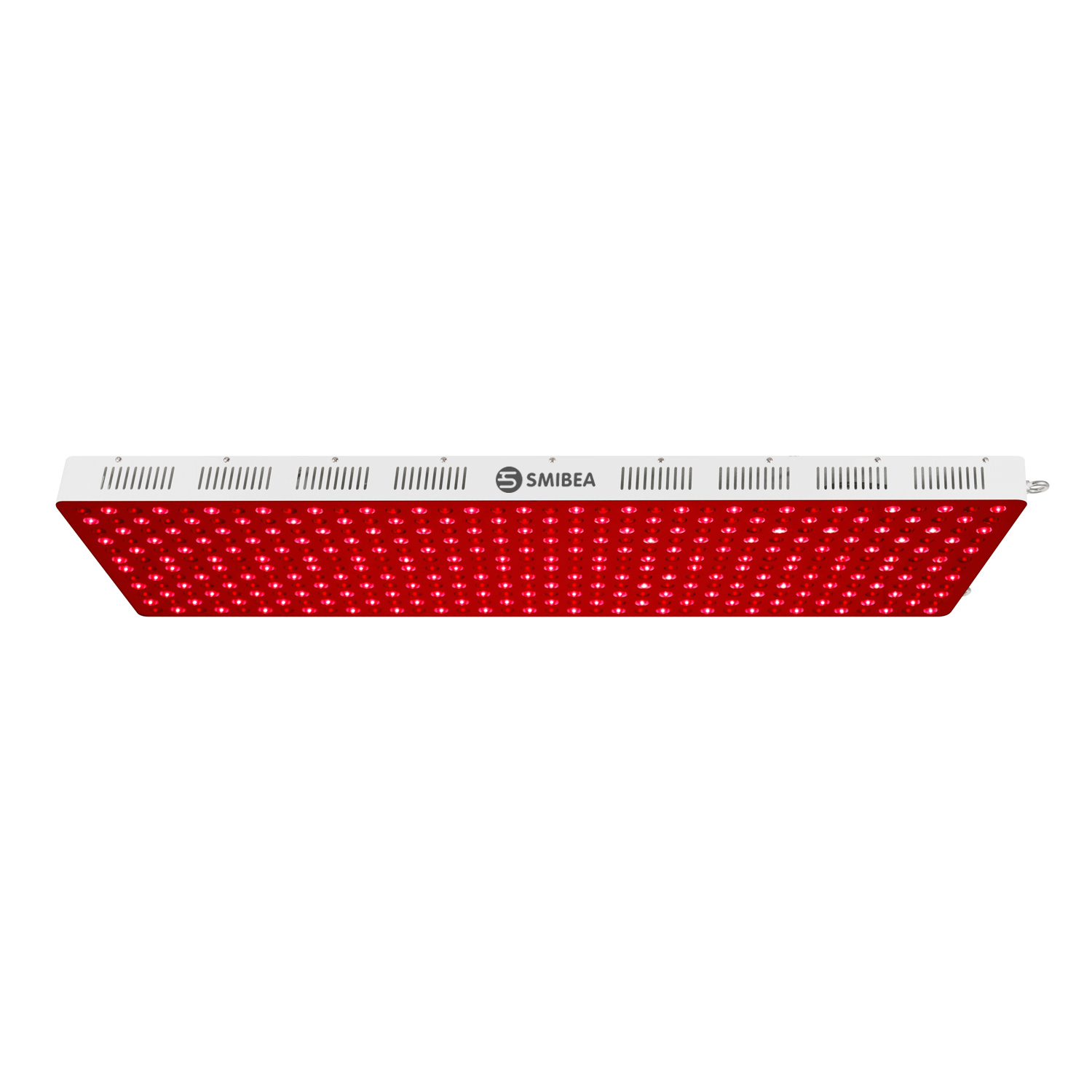
According to media reports, British scientists may have found a low-cost, low-tech method to combat the vision loss that occurs during aging. In a small clinical trial they conducted, subjects over the age of 40 showed a significant improvement in vision after staring at a dark red light for three minutes a day. They report that they can see more clearly in the dark and their ability to distinguish colors has improved.
Red light is often used in skin care. Theoretically, light with longer wavelengths will have a unique regeneration effect on mitochondria. Mitochondria are organelles in cells that are responsible for processing energy and keeping the body running. The wavelength of these rays is between the edge of visible light (dark red) and infrared light. Mitochondria will absorb the energy in them, and according to the above theory, its performance will be enhanced. This should strengthen the body's wound healing ability, reduce inflammation and pain, and even promote hair regeneration, depending on the location of the light.
There are mitochondria in most types of cells, but they are especially abundant in the retina. The retina is a thin membrane in the eye that captures external light and converts it into information for transmission to the brain. Without the retina, we would be blind. But as we age, the mitochondria in the retina will fail much faster than mitochondria in other body tissues. Scientists believe that, in addition to other degenerative eye disorders, this is one of the main reasons for the decline in vision with aging.
"However, mitochondria can absorb some forms of light, including deep red light. This is like charging a battery, which can enhance cell function. Since the retina contains a large number of mitochondria, red light is particularly effective. So we can use this Means to improve eyesight." said the lead author of the study, Glenn Jeffrey, an eye researcher at University College London.
Jeffrey and his team had previously done experiments on mice, bees, and fruit flies, and the performance of their retina improved after red light exposure. In the latest research published in the journal "Geriatrics" this time, human subjects are more involved.
In this clinical trial, the researchers recruited 24 subjects between the ages of 28 and 72, all of whom had no known eye problems. During the two-week period, these volunteers need to stare at a red "flashlight" every day for three minutes. This special device is made by researchers, and the wavelength of light is about 670 nanometers. Before and after the experiment, the subjects took a vision test to evaluate their ability to see objects in the dark (rods) and their ability to distinguish color contrast (cones).
The average performance of subjects under the age of 40 was almost the same before and after receiving red light therapy. However, the performance of the two tests improved after subjects over 40 years of age received treatment, and both were statistically significant. However, the subjects generally performed better in the color test.
These findings are currently only a proof of concept, not to mention that the subjects are all healthy people. But Jeffrey pointed out: "Visual acuity will decline significantly as the body ages, which is a big problem for society and individuals."
The findings of this study are indeed thought-provoking, but to prove the effectiveness of this type of therapy, more subjects and more experiments are needed. Although the risk of red light therapy is very low (also known as low-energy light therapy, because the energy produced by light does not damage cells), its health effects have not been scientifically verified, and there are many unknowns.
This does not mean that the results of these studies are invalid, or that we will not use regular red light exposure as a means of improving vision for the elderly. It just means that we should be cautious before accepting such treatments and wait for more evidence to come out.
Jeffrey and his team are already conducting follow-up experiments. So far, their research has shown that if you receive red light therapy every two days or even every three days, you can achieve the same effect as once a day. They also used red light with a shorter wavelength and weaker intensity in the experiment. In addition, they wanted to figure out why some people's eyesight seemed to improve more significantly than others after receiving the treatment.